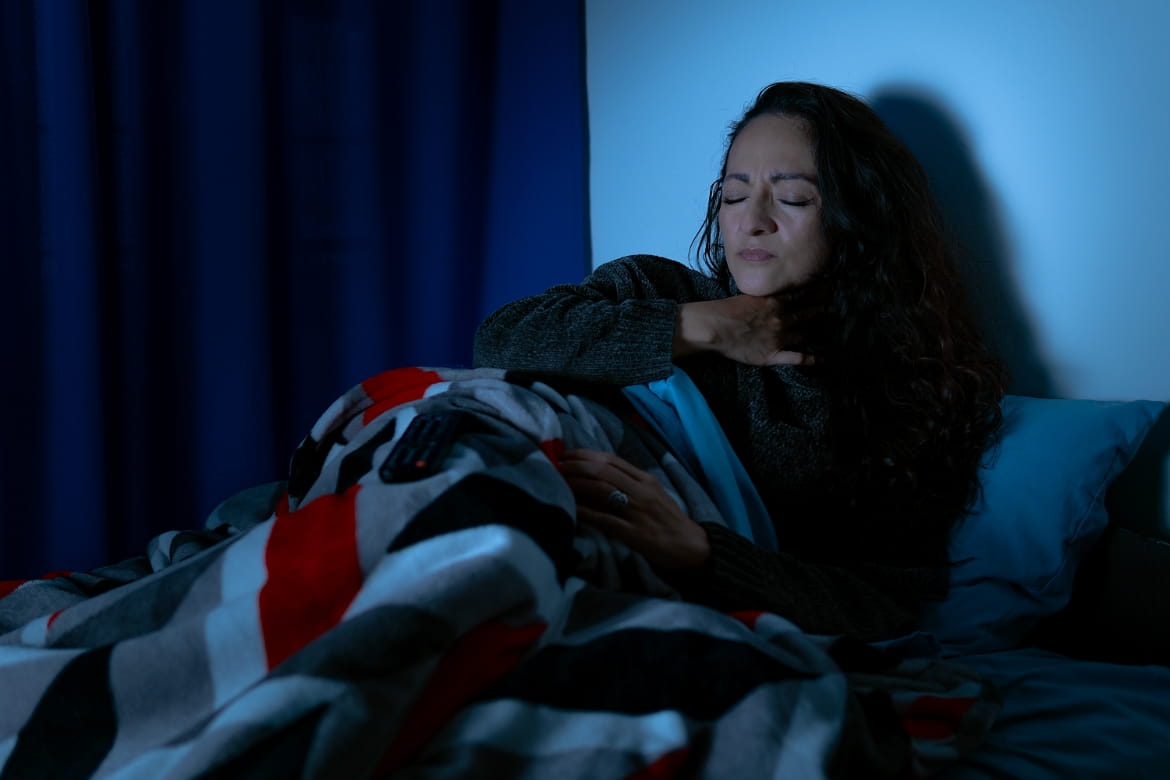
Banner Health sleep specialists understand sleep issues that are unique to women. You may have trouble sleeping during your menstrual cycle, pregnancy or menopause due to the changes in hormone levels. Our expert sleep staff is here to treat these conditions as well as any other sleep disorders you may experience.
As hormones change during your menstrual cycle, you may experience symptoms like nausea or cramps. These symptoms may cause sleep disruptions before and during your menstrual cycle. While all women and menstrual cycles are different, you may also experience tiredness during the day, trouble falling asleep and lesser amount of deep sleep during this time of the month.
Pregnancy is an exciting time in your life that can sometimes be complicated by sleep conditions. Our sleep experts are here to keep you and your baby safe from sleep-related problems.
Throughout your pregnancy, swollen tissue and weight gain can cause you to snore and the blockage in breathing can even lead to sleep apnea. This can increase you and your baby’s risk for high blood pressure. Talk to your doctor if loud snoring or daytime sleepiness continues throughout your pregnancy.
Insomnia can also occur during your pregnancy and is one of the more common sleep disorders that can develop, usually in the second and third trimester. During your first trimester, your progesterone levels are high, and as you continue into your second and third trimester, these levels lower along with other hormone change. Hunger may also increase at night.
Other common sleep disorders or interruptions during your pregnancy may include:
Menopause-related sleep disruptions are common. Hormone levels drop and cause hot flashes. This cycle will often affect your sleep and can continue for up to five years. Prescription medicine, natural treatments or naps can help your symptoms. However, naps should be avoided if you have a history of insomnia.
Learn more about menopause, including stages, symptoms and how menopause affects your body.
When it comes to menopause and trouble sleeping, first try at home remedies such as:
If you are having trouble sleeping or experiencing any sleep conditions that may be related to pregnancy, menopause or your menstrual cycle, talk to your provider about your symptoms to determine the next best steps for you and your health. Our sleep medicine experts can create a care plan tailored to you and your need so you can sleep soundly.

 Sign in to Patient Account