Advise Me

Are Vegetable and Bean Pastas Healthier Than Traditional Pasta

The pasta aisle has changed. Next to the familiar boxes of spaghetti, penne and fettuccine, you’ll now find chickpea pasta, lentil pasta, whole wheat pasta, veggie pasta and more. Every package promises something different: more protein, more fiber, fewer carbs or more vegetables.

With so many choices, it’s easy to wonder if regular old pasta is still a healthy option. The short answer: vegetable and bean pastas can offer some benefits. But that doesn’t make traditional pasta unhealthy and it doesn’t mean every “veggie” pasta on the shelf lives up to its name.

“One of the biggest myths I hear is that pasta isn't part of a healthy diet because it has too many carbs," said Allison McLeod, MS, RDN, a dietitian at Banner Health. “But regular pasta (white and whole wheat) can absolutely fit into a healthy eating pattern.”

Vegetable and bean pastas can be healthy choices but they are not all the same. Some offer more protein and fiber. Others help you eat more vegetables. Some look healthy but are still mostly wheat flour.

Each type of pasta has its own strengths. The best choice depends on your nutrition goals, taste, texture, allergies, budget and how you build the rest of your meal.

Why regular pasta gets a bad rap

For years, carbohydrates have been blamed for weight gain and blood sugar problems. Because pasta is high in carbohydrates, many people assume it’s unhealthy. But that’s only part of the story.

“Pasta is actually a low glycemic index food,” McLeod said. “That means it doesn’t raise blood sugar as quickly as many people think.”

How you cook pasta can also make a difference. Pasta cooked al dente has an even lower glycemic index. If you cool cooked pasta and eat it later, such as in pasta salad or reheated leftovers, some of its starch changes into resistant starch. Resistant starch slows digestion and the release of glucose into your bloodstream.

Portion size still matters. McLeod recommends sticking to about one cup of cooked pasta, about the size of your fist. Pairing pasta with vegetables, lean protein and healthy fats also helps slow digestion and keeps you feeling satisfied longer.

Instead of thinking about whether pasta is “good” or “bad,” think about the meal as a balanced whole.

Exploring today’s pasta options

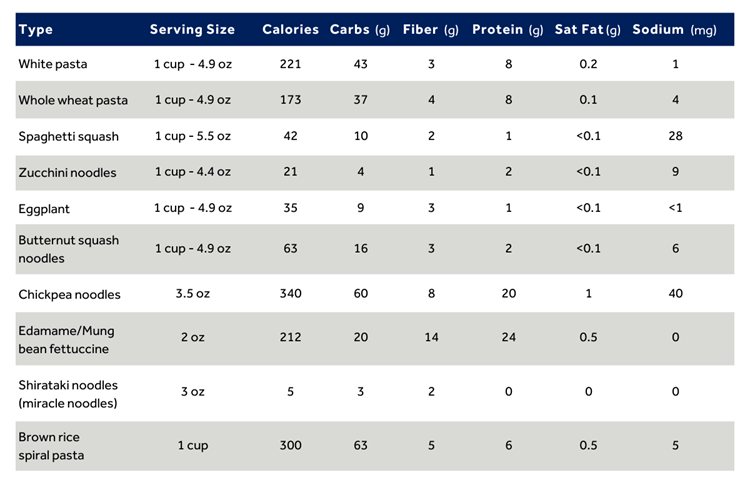
Traditional pasta is no longer your only choice. Here’s a closer look at the different types you’ll find at the grocery store.

Regular white pasta

Made from: Refined durum wheat flour, water and sometimes eggs

Traditional pasta is affordable, easy to cook and works well with almost any sauce. It’s also often enriched with iron and B vitamins. White pasta has less fiber than some alternatives but it still provides carbohydrates your body uses for energy.

Best for: Families looking for a classic taste and texture and budget-friendly meals.

Keep in mind: White pasta has less fiber than whole wheat or bean-based varieties, so add vegetables and lean proteins to create a more balanced meal.

Whole wheat pasta

Made from: Whole wheat flour

Unlike white pasta, whole wheat pasta contains the entire grain, including the bran and germ. That means more fiber, vitamins and minerals. Fiber supports digestion, helps keep you feeling full, helps keep blood sugar steadier after meals and may help lower cholesterol.

“People are concerned with getting enough protein these days but it’s fiber that should really be getting all the attention,” McLeod said. “Most Americans aren’t getting enough dietary fiber, so whole wheat pasta can be an easy way to help meet your daily fiber needs.”

Best for:

  • People who want more fiber
  • People who are trying to eat more whole grains

Keep in mind: Whole wheat pasta has a heartier flavor and firmer texture than traditional pasta, which some people may not enjoy.

Bean and lentil pasta (pulse flour pasta)

Made from: Chickpeas, lentils, black beans, edamame or other legumes

Bean and lentil pasta is a type of pulse pasta, made from the flour of legumes (pulses). Because of this, it naturally provides more protein and fiber than traditional pasta.

Legumes are nutritional powerhouses. They provide protein, fiber, folate, iron and potassium. They also contain soluble fiber, which can help support healthy cholesterol levels.

Best for:

  • People who want more plant-based protein
  • People with diabetes or high cholesterol levels
  • People who are gluten intolerant or have celiac disease
  • People taking a GLP-1 medication who need nutrient-dense foods in smaller portions
  • Picky eaters who don’t enjoy many protein foods

Keep in mind: Texture can vary. Some bean pastas are softer, stickier or a little gummier than traditional wheat pasta. If you don’t like one brand, try another before giving up.

Boxed “veggie” pasta

Made from: Mostly wheat flour with added vegetable purees or powders.

Some vegetable pasta brands are made mostly of wheat flour and contain only a small amount of added vegetable matter for color, flavor and extra nutrients. While it’s a healthy option, chances are you’d have to eat a fair number of calories to get a full veggie serving.

“Most veggie pastas are made with vegetable purees, which offer more phytochemicals than traditional pasta,” McLeod said. “While that’s a bonus, most Americans still need to eat more fruits and vegetables.”

In other words, boxed veggie pasta can provide extra plant nutrients but it doesn’t replace eating fresh vegetables.

Best for: People who enjoy traditional pasta but want a small nutritional boost.

Keep in mind: Don’t count boxed veggie pasta as a serving of vegetables.

Vegetable noodles

Made from: Whole vegetables such as zucchini (zoodles), butternut squash, carrots or hearts of palm

Vegetable noodles are not flour-based pasta. They’re vegetables that are cut, scraped or spiraled into noodle-like shapes. They’re an easy way to eat more vegetables while adding vitamins, minerals and fiber to your meal. While they add volume and nutrients, they are less filling than grain or pulse pastas on their own.

Best for:

  • People looking to increase their vegetable intake
  • People who are gluten intolerant

Keep in mind: McLeod said because vegetable noodles are lower in carbs and protein, they usually aren’t as filling. For a satisfying meal, she suggests pairing them with lean protein, healthy fats and other nutrient-rich ingredients.

Other alternative pastas

In addition to the pastas above, here are some additional pastas (all of which are gluten-free):

  • Quinoa pasta
  • Brown rice pasta
  • Soba (buckwheat) noodles

Which pasta is best for you?

Instead of looking for the healthiest pasta, think about what you’re hoping to get from your meal.

  • Pick regular pasta if you love its familiar taste and texture and want an affordable option.
  • Pick whole wheat pasta if your goal is adding more fiber and whole grains to your diet.
  • Pick bean and lentil pasta if you’d like more protein and fiber or want a plant-based alternative.
  • Pick boxed veggie pasta if you enjoy traditional pasta but like the idea of adding a few extra plant nutrients.
  • Pick vegetable noodles if you’re trying to eat more vegetables or want a lighter meal. Just remember to include protein so you’ll stay full.

No matter which option you choose, no single pasta is healthier than all the others. Each one has its own benefits.

What should you look for when buying pasta?

When comparing different types of pasta, consider the following when reading their nutrition labels:

Check the serving size

The serving size listed on the nutrition label matters because many people eat more than the recommended amount. A standard serving is about two ounces of dry pasta or one cup of cooked pasta.

Look at the ingredients

“A simple pasta should contain only a few ingredients, such as flour, water and possibly salt or olive oil,” McLeod said.

Compare fiber

Fiber is one of the biggest nutritional differences between pasta types. A typical serving provides about:

  • White durum wheat pasta: Two to three grams of fiber
  • Whole wheat pasta: About seven grams of fiber
  • Pulse flour pasta: More than eight grams of fiber

Build a balanced meal

The noodles are only one part of dinner.

“What you put on your pasta has a far greater impact on the overall dietary quality of your meal than the pasta alone,” McLeod said.

Fill your sauce with colorful vegetables. Add lean protein like chicken, shrimp or tofu. Choose marinara, primavera or pesto more often than heavy cream sauces. Flavor meals with herbs and spices and keep portions around one cup of cooked pasta.

A bowl of regular pasta with marinara, grilled chicken and roasted vegetables is often a healthier meal than bean pasta covered in rich Alfredo sauce.

Takeaway

Pasta doesn't have to be off the menu. Regular pasta, whole wheat pasta, bean pasta and vegetable-based options can all fit into a healthy eating pattern. They simply offer different benefits.

The healthiest choice isn't about chasing the newest trend. It's about choosing the pasta that fits your nutrition goals, your budget and your taste and building a balanced meal around it.

FAQs

Is regular pasta unhealthy?

No. Regular pasta can be part of a healthy diet. It's a low glycemic index food and, when eaten in appropriate portions with vegetables, lean protein and healthy fats, it can be part of a balanced meal.

Is whole wheat pasta healthier than white pasta?

Whole wheat pasta provides more fiber and nutrients but both types can fit into a healthy eating pattern.

Does boxed veggie pasta count as a serving of vegetables?

Usually not. Most boxed veggie pastas are made mostly with wheat flour and contain only small amounts of vegetable puree or powder.

Is bean pasta better for you?

Bean pasta generally contains more protein and fiber than traditional pasta, making it a good option if you're trying to increase those nutrients.

Are vegetable noodles healthier than pasta?

Vegetable noodles are a great way to eat more vegetables but they're much lower in protein and carbohydrates so they may not keep you full unless paired with protein and healthy fats.

What's the healthiest way to serve pasta?

Choose reasonable portions, add plenty of vegetables, include lean protein and use lighter, vegetable-rich sauces more often than heavy cream sauces.

Related articles:


Nutrition